


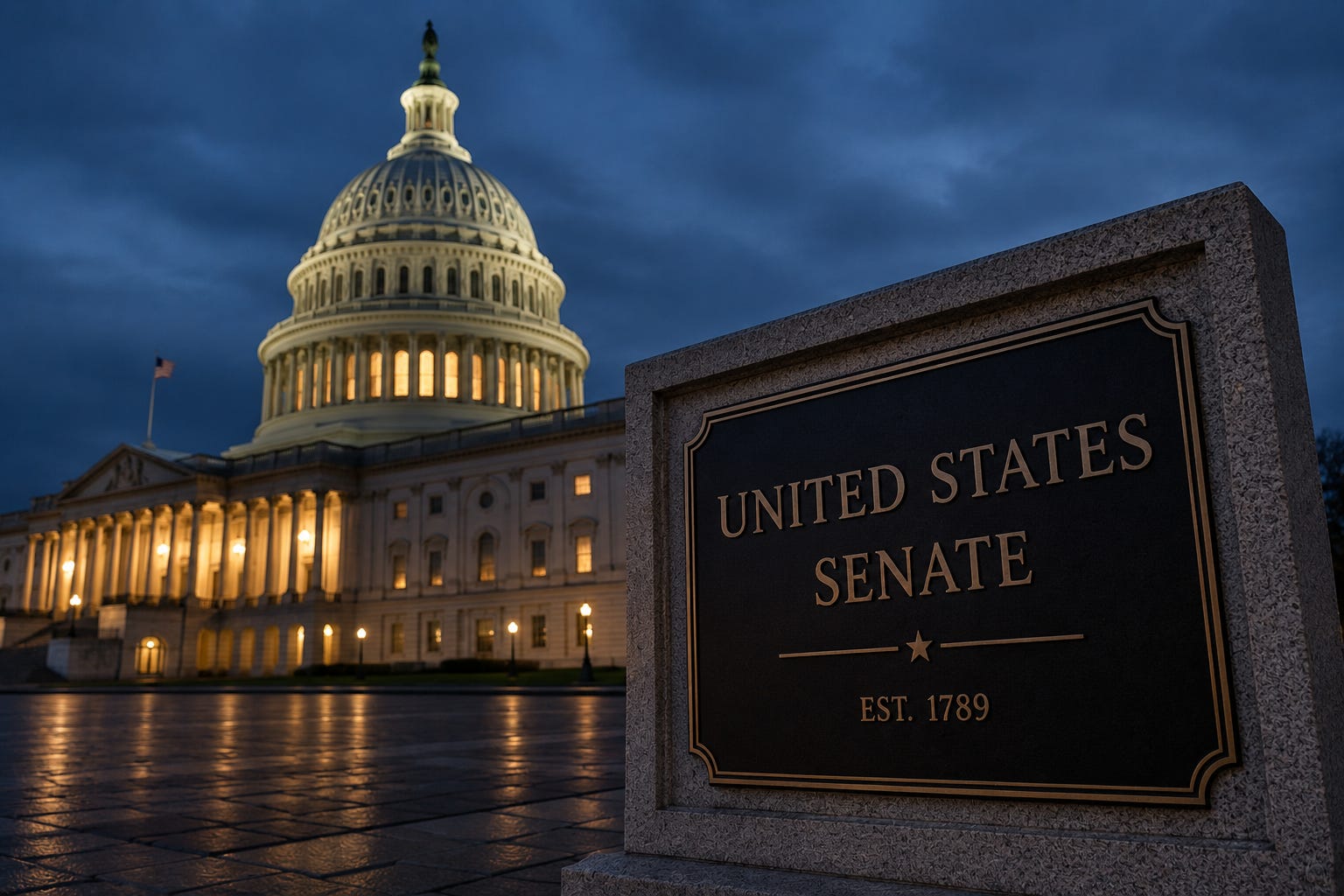
Most Mississippians do not know that on July 1, 2025, a little after four o’clock in the morning, the United States Senate voted 99 to 1 to strip a federal AI moratorium out of the One Big Beautiful Bill Act.
That sounds technical. It was not.
Had that moratorium stayed in the bill, Mississippi could have lost its ability to enforce ordinary state and local rules on the most important industrial development happening in our state.
The danger was real because the provision was real. The House-passed version of the bill contained language imposing a ten-year moratorium on state and local enforcement of laws or regulations “limiting, restricting, or otherwise regulating” artificial intelligence models, artificial intelligence systems, or automated decision systems.
Ten years.
The text was not written as a data-center bill, and that is exactly why it was dangerous. Broad federal language rarely stays narrow once lawyers get hold of it. If an AI data center exists to train, host, or operate AI systems, then companies could argue that state and local rules affecting those facilities are really rules affecting AI. We would have been forced to fight for the right to enforce our own rules on our own soil.
That could have affected Mississippi DEQ. It could have affected county zoning decisions, noise rules, setback requirements, permitting conditions, and environmental reviews if they were challenged as restrictions on AI infrastructure. It could have invited new challenges to utility and grid decisions touching AI data-center loads.
Apply that to what is already happening. The lawsuit over xAI’s Southaven gas turbines turns in part on Mississippi DEQ’s interpretation of its own temporary-mobile rule. Under a broad reading of the moratorium, xAI or another operator could have argued that state permitting authority over AI-supporting infrastructure was preempted. I want Ai data centers to build in Mississippi, but we need to set the rules not Washington.
What killed the moratorium was a Senate amendment offered by Senator Marsha Blackburn of Tennessee and backed by a bipartisan group. The vote was 99 to 1. Mississippi’s two senators, Roger Wicker and Cindy Hyde-Smith, both voted with the 99. Three days later, the President signed the bill without the moratorium in it.
The encouraging part is the margin. When the Senate actually voted on whether states should be shoved aside for ten years on AI regulation, the answer was not close.
The alarming part is that the question almost never got asked.
The provision had already been written, negotiated, tucked into a massive reconciliation package, and passed by the House. It was not in some left-wing bill from California. It was in a Republican-led budget bill supported by an administration most Mississippi conservatives voted for.
That is worth remembering. Government does not only threaten local authority when the other party is in charge. Sometimes it does it with your party’s logo on the letterhead.
The federal preemption fight is not over. Senator Ted Cruz, who pushed the moratorium, has made clear the idea is not dead. The technology industry still wants one national rule, and that is easy to understand. One federal rule is cheaper than fifty state fights and easier than convincing county supervisors in DeSoto, Madison, Lauderdale, or anywhere else ordinary people might ask inconvenient questions about water, power, noise, emissions, taxes, and who pays when the deal goes bad.
This is exactly what federalism is for. Mississippi has its own DEQ, Public Service Commission, county supervisors, and city councils so decisions about what gets built next to our neighborhoods are made by people we can call, confront, embarrass, defeat, and replace.
A Senate cloakroom is not local government. A lobbyist-written preemption clause is not economic development. And a thousand-page bill passed in the middle of the night is not self-government.
Throughout this series, I have argued that Mississippi should welcome the data-center boom on its own terms. We should write the rules, enforce them fairly, reject corporate-welfare deals, protect ratepayers, and let the projects stand on their own engineering and balance sheets.
None of that works without local authority.
Mississippi must have the right to say yes. We must have the right to say no. And most importantly, we must have the right to say, “Yes, but not like that.”
In July 2025, we almost lost part of that right before most of us even knew the vote was happening. The next attempt is already being telegraphed. This time, Mississippi conservatives should be paying attention before it gets to four in the morning.
Dana Criswell: Have you been paid to support Data Centers? Ask your grandchildren if you were paid enough to make it worthwhile for you to assist in destroying their future: https://healthranger.substack.com/p/ai-data-center-zealots-have-joined?publication_id=1225906&post_id=213854105&isFreemail=true&r=3nhr4v&triedRedirect=true&utm_source=substack&utm_medium=email