


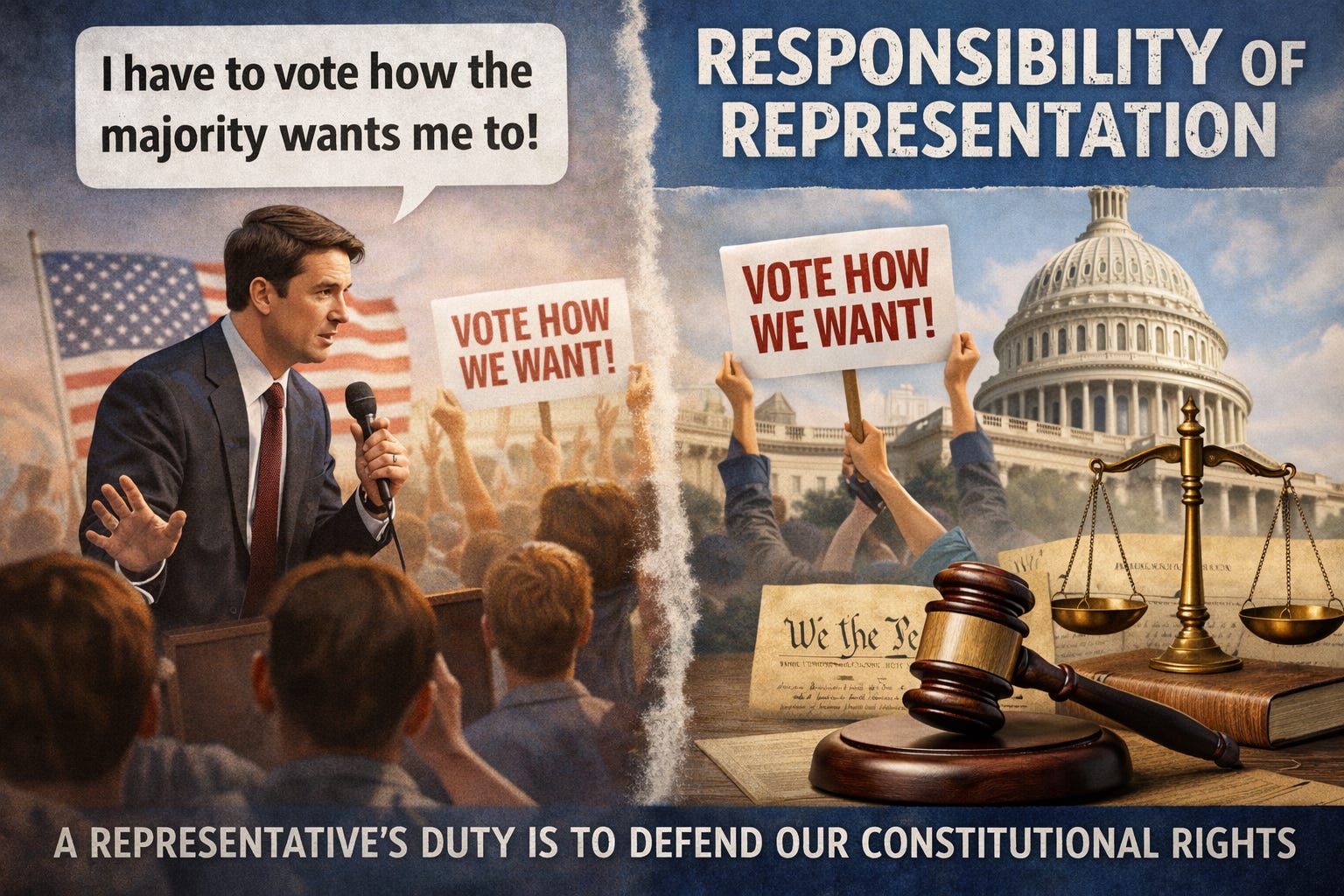
In a recent conversation between a colleague of mine and a candidate running for state legislature, the candidate was asked about his views on several policy issues. He was thoughtful, open, and willing to explain his beliefs. But then he added a caveat that should concern every voter: once elected, he said, he would be obligated to vote however the majority of his district wanted—regardless of whether it conflicted with his own judgment or principles.
This may sound democratic, even virtuous. In reality, it reflects a fundamental misunderstanding of what it means to serve in a representative republic.
In our system, citizens do not elect legislators to function as human polling machines. They elect representatives to exercise judgment on their behalf within the constraints of a constitution. Those representatives are accountable to voters at election time, but while in office they are sworn to uphold the constitution, respect limits on government power, and protect individual rights—even when doing so is unpopular.
The idea that an elected official must always follow the immediate will of the majority is closer to direct democracy than representative government. History shows why that distinction matters. Majorities are not infallible. They can be misinformed, driven by fear, or motivated by short-term passions. Without restraint, majority rule easily becomes majority tyranny.
If a legislator believes he must vote for any policy his district demands, then constitutional protections become optional. Free speech, due process, property rights, and equal protection all become subject to popular vote. That is precisely what constitutions exist to prevent. Rights are not supposed to hinge on whether they are fashionable or politically convenient.
This mindset also creates a convenient escape hatch for politicians. “My hands were tied,” they say. “My district made me do it.” In practice, this often becomes a way to justify voting against principles they claim to hold, while avoiding responsibility for the consequences. Leadership is replaced with blame-shifting, and conviction gives way to convenience.
True representation requires more courage than that. It means listening to constituents, understanding their concerns, and taking them seriously—but not surrendering independent judgment. It means explaining difficult votes, defending unpopular positions, and trusting voters to decide whether that judgment deserves another term. Accountability comes at the ballot box, not through daily referendums.
The Founders understood this well. They designed a system meant to slow down rash decisions, elevate deliberation, and protect liberty from both authoritarian rulers and unchecked majorities. A legislator who does not understand this role—or worse, openly rejects it—poses a real risk to constitutional government.
Voters should be wary of candidates who promise to “just vote how the district wants.” That promise may feel empowering, but it ultimately weakens the very safeguards that protect minority rights, economic stability, and the rule of law. We should expect more from those who seek office—not blind obedience to opinion polls, but informed judgment grounded in principle and constitutional restraint.
A representative republic depends not just on good laws, but on legislators who understand why those laws exist—and who are willing to uphold them, even when it’s hard.
Just wanted to say thank you for your well-written understandable articles. Are you able to get your articles into the hands of younger citizens?
Thanks,
Robert Anderson
I agree with what you've written. My question to you is: Do *you* agree with what you wrote? Knowing that Trump did in fact try to extort political activism from a foreign leader, and did in fact foment an insurrection, as evidenced by his trial *and* speeches by Republicans during their voting, and has continuously violated the Emoluments Clause of the Constitution, how should Republican Senators have voted in each of Trump's impeachment trials?