


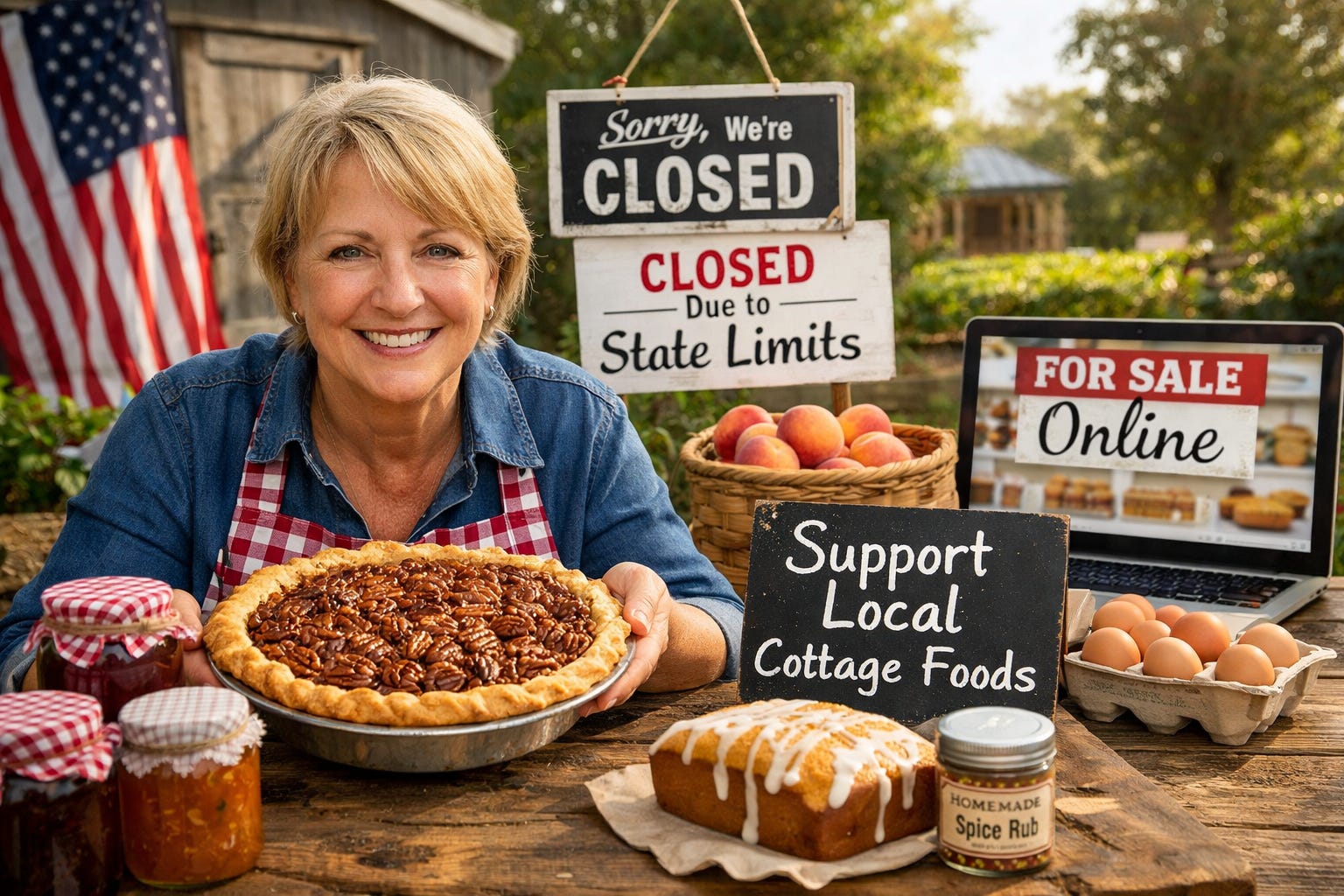
On any Saturday morning across Mississippi, you can find them: home bakers selling pecan pies from their kitchens, church members raising funds with pound cakes, families making jams and jellies from backyard fruit. These “cottage food” producers embody Mississippi’s work ethic and entrepreneurial spirit. Yet under current law, the state tells them, “You can only succeed so much.”
House Bill 910 would finally change that.
In plain terms, HB910 does two simple but powerful things. First, it removes the annual gross sales cap on cottage food operations — the arbitrary limit on how much these home-based businesses are allowed to earn each year. Second, it allows them to sell online, by mail, wholesale, and through third-party retailers directly to consumers in Mississippi.
That’s it. No new bureaucracy, no new program, no new tax. Just more freedom for Mississippians to work, create, and trade.
Right now, a home baker who starts to find real success hits a government-imposed ceiling. Imagine a single parent in Tupelo who builds a loyal following for her gluten-free breads. Under current law, once she reaches the cap, she must either turn customers away or shut down growth unless she’s ready to take on expensive commercial kitchen costs. A law that was supposed to help small businesses ends up punishing the very people it was meant to support.
Removing the cap doesn’t guarantee success, but it stops the government from limiting it.
Allowing online and expanded sales channels is just as important. In 2026, telling entrepreneurs they can’t sell their products online is like telling farmers they can’t use tractors. A retired veteran in Natchez who makes the best spice rub in the county should be free to sell it through a website or a local grocery store without having to navigate outdated restrictions. Consumers who want to support local producers shouldn’t have to track them down at a farmer’s market when a click or a simple in-store purchase would do.
HB910 is a modest, commonsense reform — but it touches fundamental liberty principles.
It respects property rights: if you own your kitchen, your time, and your recipe, you should be free to use them to earn a living, so long as you’re honest with your customers. It strengthens voluntary exchange: willing buyers and willing sellers should be allowed to do business without the state artificially standing in the way. And it advances limited government: state agencies shouldn’t be in the business of deciding how much a home baker is “allowed” to prosper.
Safety concerns are often raised in these debates, but Mississippi already limits cottage foods to non-potentially hazardous products and requires clear labeling. HB910 doesn’t erase common-sense protections; it removes economic shackles that have nothing to do with health and everything to do with control.
Legislators often talk about supporting small business, rural opportunity, and self-reliance. HB910 is a chance to prove it. More home-based businesses mean more income in local communities, more options for consumers, and more Mississippians charting their own course rather than waiting on government help.
Mississippians should contact their representatives and senators and urge them to pass HB910. It’s time to get out of the kitchen of home entrepreneurs and let them cook — and sell — as much as the free market will bear.
That bill needs to be passed. People who make cottage foods and live in a small town are at such a disadvantage by not being able to sell online. Even selling online within the state would help.